The Missing Meal Shift: How Hot Food Vending Machines Serve the Hours Cafeterias Ignore
A 2026 guide to building reliable unattended meal service for factories, hospitals, campuses and 24-hour workplaces.
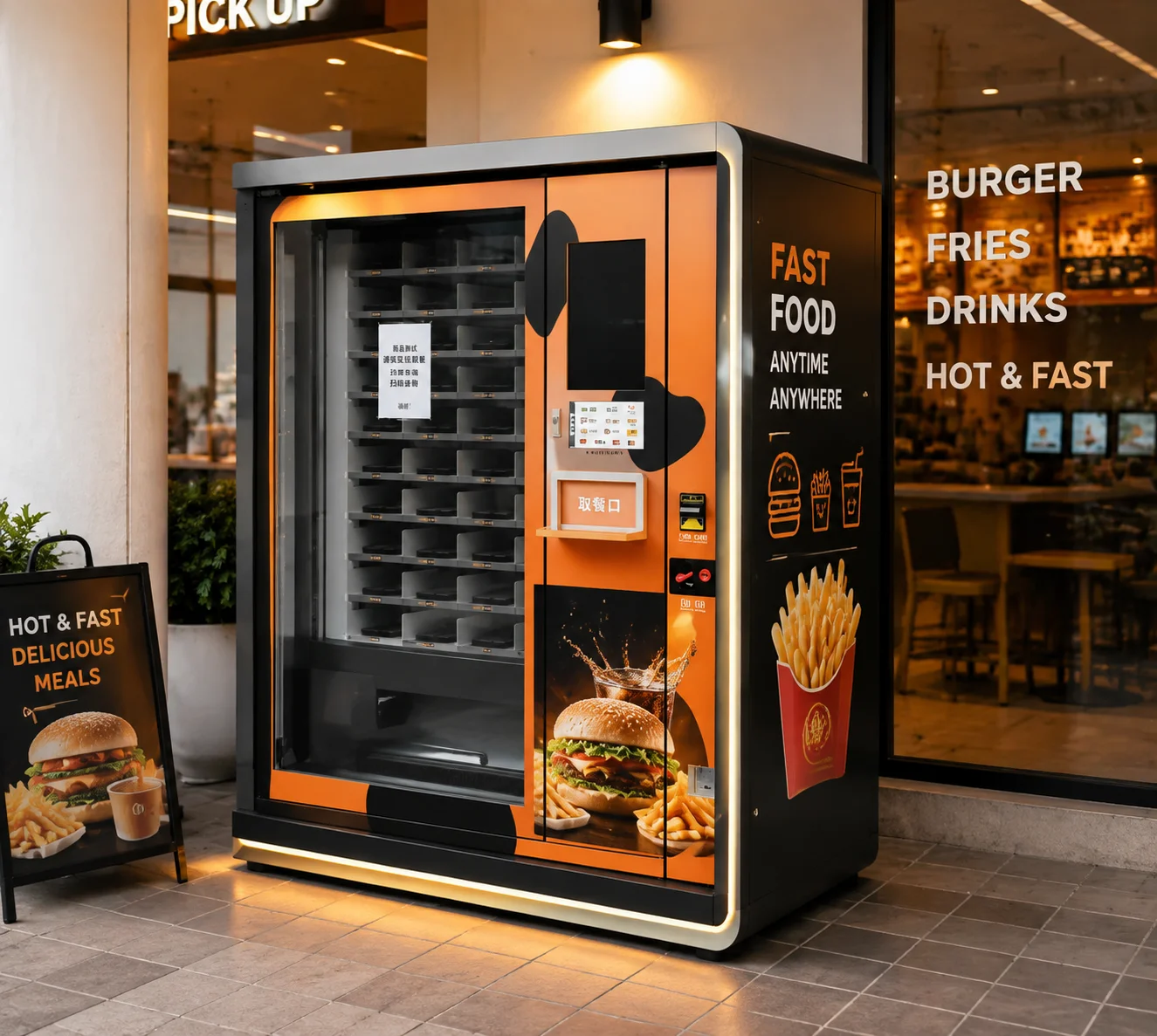
The hardest meal to serve is often not lunch. It is the meal at 3:10 a.m., between production lines; the dinner after a hospital cafeteria closes; or the hot option a student needs after an evening lab. These are missing meal shifts — periods when people are still working, traveling or studying, but staffed food service has disappeared.
A hot food vending machine can close that gap. But the business case is stronger when the machine is designed as a small unattended food-service operation, not a larger snack vendor. The menu, temperature controls, payment, replenishment and service plan have to work together.
1Map the gap by hour and by person
Begin with a one-week demand map. Record shift changes, break lengths, cafeteria hours, delivery availability and walking time to alternatives. Interview the people who are actually on site after hours. A facility manager may describe "night-shift demand," while workers describe a 14-minute break in which the nearest open restaurant is impossible to reach.
Useful deployment settings include factories and warehouses, hospitals and care facilities, universities, transport hubs, offices with overtime teams and residential communities. The common signal is not simply high traffic; it is a repeated meal need paired with limited time or limited alternatives.
2Design a menu for the machine journey
A dish that performs well in a cafeteria may fail after chilling, storage and automated reheating. Build the menu around texture stability, portion consistency, packaging, heating uniformity and a clear shelf-life process. Rice bowls, noodles, pasta, soups, curries, sandwiches and regional comfort foods may all work, but every recipe requires its own validated handling and heating instructions.
Offer enough variety to support repeat users without creating slow-moving inventory. A practical launch menu might combine dependable core meals, a vegetarian option and limited weekly rotations. Display ingredients, allergens, nutrition information where required, heating status and use-by controls clearly before purchase.
3Make food safety visible and operational
Customers cannot see the back room, so the machine must communicate trust. Show that refrigerated storage is monitored, explain how food is replenished and identify who to contact. Operators should document receiving, temperature checks, date coding, stock rotation, cleaning, pest prevention, waste handling and the response to a power or refrigeration alarm.
Requirements vary by country and locality. In the United States, FDA vending-machine calorie labeling applies to certain operators with 20 or more machines and allows calorie information to be displayed electronically in qualifying cases. That is one example of why equipment selection and screen design should be reviewed alongside local health and labeling rules — not after installation.
4Use data to prevent an empty or stale promise
Remote monitoring should help the operator decide what to do next. Useful data includes stock by SKU, temperature and alarm history, sell-through by daypart, payment status, heating errors and expiration risk. A dashboard that only reports revenue is not enough for fresh food.
Set replenishment rules by shift. If a hospital's strongest demand arrives at 7 p.m. and 2 a.m., a noon restock may be badly timed. If a factory closes on weekends, a Friday fill can create waste. Start with conservative par levels, learn the rhythm and allow the menu to adapt by location.
5Build the economics around service reliability
Calculate more than food margin. Include machine purchase or lease, freight, installation, refrigeration and heating energy, software, payment fees, packaging, replenishment labor, food waste, cleaning, preventive maintenance, permits, insurance and location commission. Then assign a cost to downtime during the target meal shift.
A useful pilot has pre-agreed success metrics: transactions per eligible worker or resident, sell-through, gross margin after waste, stockout minutes, heating success, refund rate and satisfaction. A high first-week trial rate is less valuable than a stable fourth-week repeat pattern.
6Position the machine as an amenity and a revenue asset
For an employer or institution, the outcome may include better night-shift experience, shorter off-site breaks and consistent access. For an operator, the outcome is a new recurring route with measurable demand. The website should speak to both: "hot meals when the cafeteria is closed" for the location owner, and "remote-managed sales with configurable menus" for the operator.
The missing meal shift is a narrow problem with a large human impact. Serve it with a menu made for the machine journey, a visible food-safety system and operations that respond before the customer discovers the problem. That is how hot food automation becomes dependable meal infrastructure rather than a one-time curiosity.
Tell us your site type, shift schedule, meal format and expected users per shift. We'll help define a hot-food vending configuration and pilot checklist.