Your Restaurant Is Closed. Your Pizza Brand Doesn't Have to Be.
How pizza vending machines are becoming a 24/7 brand-extension channel for campuses, convenience stores, airports and neighborhoods.
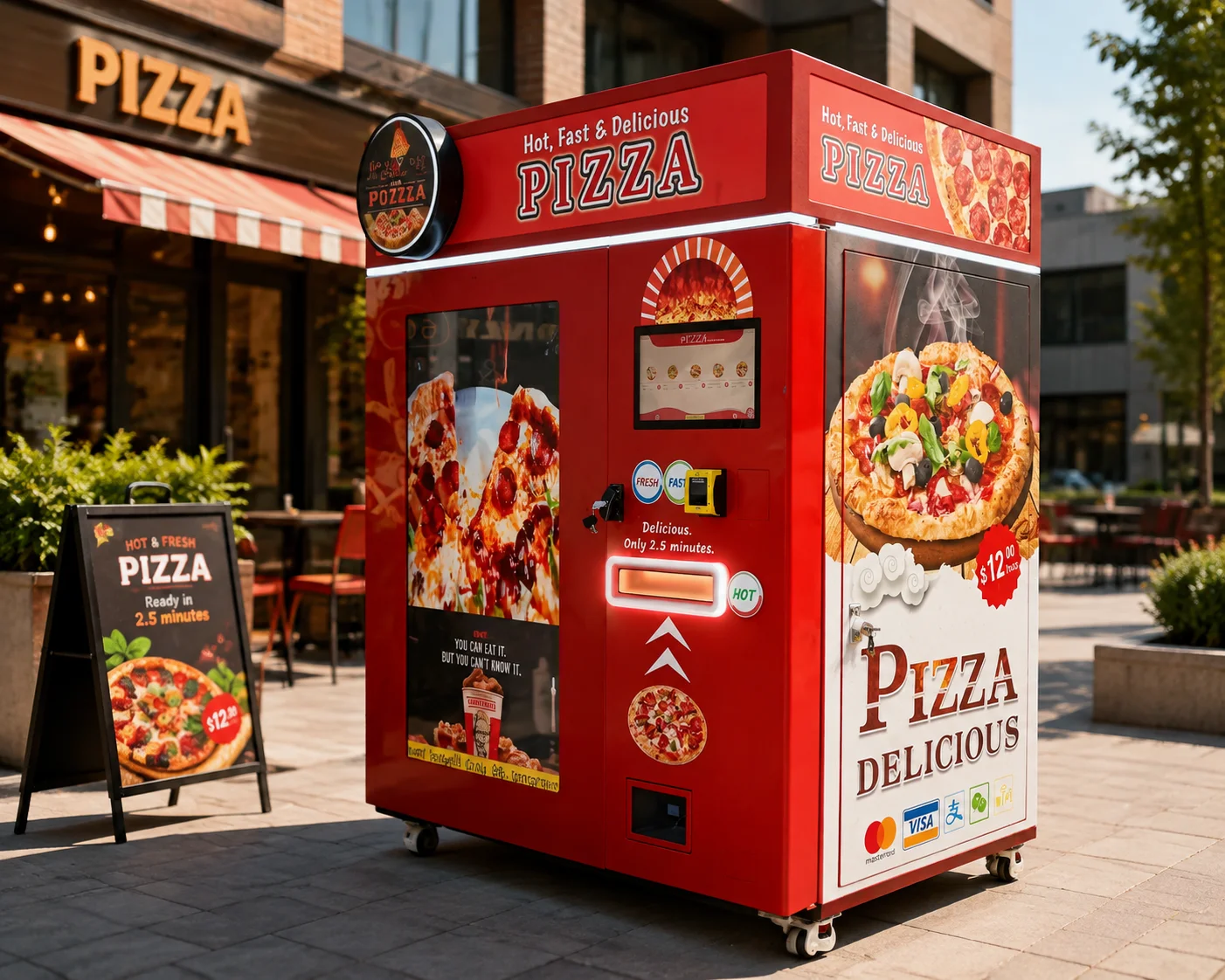
At 11:47 p.m., a restaurant has two choices: keep the kitchen open for uncertain demand, or stop selling. A pizza vending machine creates a third choice. The kitchen can close while a controlled selection of branded pizzas remains available in a second location — or just outside the restaurant — around the clock.
That distinction matters. The strongest pizza vending concepts are not trying to make diners forget the restaurant. They use automation to reach the moments the restaurant cannot serve efficiently: late-night campus traffic, hospital shifts, travel delays, apartment communities and convenience-store visits.
From novelty to channel strategy
Recent deployments show the format moving into mainstream food-service tests. Operators are placing automated pizza systems on campuses and in convenience retail, while restaurant brands are experimenting with 24/7 automated locations. The commercial logic is simple: extend availability and brand reach without staffing a complete second kitchen.
The word "vending" can still create a quality objection, so the winning story is not "pizza from a machine." It is "our pizza, available when our restaurant is closed." That message lets the brand lead and the machine support it.
1Choose the production model before the machine
Pizza vending systems can store and heat prepared pizzas, bake chilled products on demand, or automate more of the preparation process. Each model affects throughput, texture, menu variety, cleaning, replenishment and food-safety controls. A restaurant should begin with its product promise: What must the crust, cheese and toppings feel like at handoff? How many minutes will customers accept? Will the pizza be sold hot, cold for take-home, or both?
Run a blind tasting after realistic hold times. Test the slowest day as seriously as the launch day. If the recipe is designed only for an immediate oven-to-table journey, it may need adjustment for refrigerated storage and automated heating.
2Build a small menu that survives the midnight test
An unattended menu should be easy to understand in seconds. Start with proven sellers, one vegetarian option and a controlled rotation. Every extra SKU adds forecasting and replenishment complexity. Use the touchscreen to show a real product image, allergen information, heating state, expected wait and whether the pizza is ready-to-eat or take-home.
Freshness is not proven by filling the machine to maximum capacity. In some real-world pilots, operators intentionally load fewer pizzas and replenish more often. For a premium restaurant brand, a smaller fresh batch can be more persuasive than a large theoretical capacity.
3Pick locations with a meal gap, not only footfall
- Campuses: late-night demand, predictable term calendars and concentrated residential traffic.
- Hospitals: round-the-clock staff and visitors whose meal options shrink outside daytime hours.
- Airports and stations: delays, early departures and captive waiting time.
- Convenience stores: existing traffic, lighting, parking and a customer already prepared to buy quickly.
- Apartments and mixed-use developments: repeat neighborhood customers and limited late-night delivery choice.
A good location has both demand and an operating partner. Confirm who handles replenishment, date rotation, cleaning, waste, refunds, customer service and first response to alarms. The machine may be unattended; the business cannot be unmanaged.
4Treat the screen as a restaurant counter
The order screen should carry the same visual identity as the restaurant: menu names, photography, colors and tone. It can explain the cooking process, show a progress timer, promote a combo and invite the customer to scan for loyalty or location updates. A visible preparation process can also turn waiting time into theater, especially in an airport or campus environment.
Keep the checkout short. Support contactless payment, display the total before confirmation and make refunds easy to request. If the machine sells branded restaurant food, every failed transaction or cold handoff becomes a restaurant review, not merely a vending complaint.
5Measure the channel, not just the machine
Track sales by hour, SKU sell-through, waste, cook failures, payment failures, refund rate, stockout time and repeat demand. Compare machine sales with restaurant closing time and nearby event schedules. The most valuable insight may be that the kiosk reveals demand for a future store, a delivery zone or a new menu item.
For the business case, include equipment, delivery, installation, site preparation, software, payment fees, ingredients, packaging, replenishment labor, spoilage, maintenance, lease or revenue share, permits and insurance. Then model conservative, target and peak scenarios. A machine that produces revenue after closing can be attractive, but only if its food quality and service standard remain recognizably yours.
A pizza vending machine should not feel like the restaurant's compromise. Done well, it feels like the restaurant remembered the customer who arrived after closing.
Want to test a 24/7 pizza channel? Share your pizza size, production workflow, target location and desired service time. We'll help map the right storage, heating and capacity configuration.