How to Choose the Right Pizza Vending Machine for Your Location
Learn how to choose a pizza vending machine by pizza size, location, cooling temperature, heating system, energy use and daily operation needs.
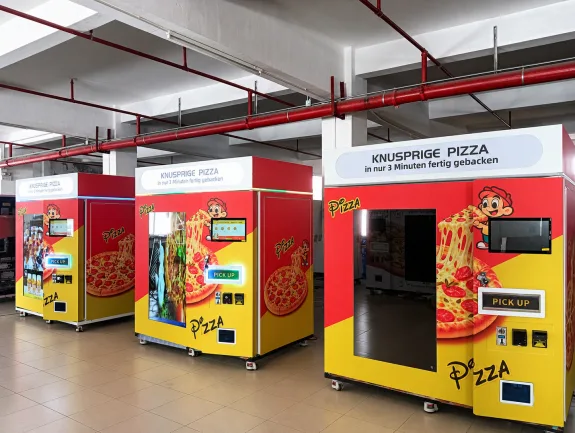
Choosing a pizza vending machine is not only about the machine appearance or price. A good machine should match your location, customer habits, pizza size, storage requirements, heating method and daily operating capacity. Before buying, it is worth thinking through how the machine will actually be used after installation.
1Start with the location and customer group
Different locations need different pizza vending solutions. A gas station, highway service area or campus may have customers who want fast food at night or during short breaks. A community, resort or family entertainment location may have more group orders and family sharing demand.
If most customers buy pizza for one person, a smaller pizza size may be enough. If the machine is placed in a location where families, groups or several friends often eat together, a 12-inch pizza vending machine is usually a better option. Larger pizza size can increase the average order value and make the machine more suitable for shared meals.
Before choosing the model, ask yourself:
- Who will buy the pizza?
- Will they eat alone or share with others?
- Is the machine for quick meals, late-night food or family dining?
- How much space is available for the machine?
- Is the location indoor, semi-outdoor or fully outdoor?
These questions help decide the cabinet size, pizza size, storage capacity and machine structure.
2Choose the right pizza size
Pizza size directly affects the machine layout, heating time, storage capacity and selling price. A 12-inch pizza vending machine is a common choice for many commercial locations because it can serve both individual customers and small groups.
For locations such as schools, offices and transport hubs, customers may prefer quick individual meals. For gas stations, campsites, tourist areas, family parks and communities, larger pizzas may be more attractive because customers often buy for more than one person.
The right pizza size should balance three things: customer demand, machine capacity and heating efficiency.
3Understand the cooling system
Pizza vending machines usually need a cooling or freezing system to store pizzas before heating. The temperature setting should depend on the pizza recipe, packaging, storage cycle, local food safety requirements and how fast the products are sold.
For some short-turnover pizza vending projects, a mild frozen setting around -5°C may help reduce heating time and energy consumption. It can also help keep the pizza easier to heat evenly, which may support better taste and texture after baking.
However, if the pizza needs long-term frozen storage, or if local regulations require deeper frozen conditions, -18°C is often used as a standard frozen storage reference. The trade-off is that lower temperature may increase power consumption and may require longer heating time. Longer heating time can also affect customer waiting time and final taste if the heating process is not well designed.
A practical choice is not always “the colder, the better.” The better choice is the temperature that keeps the pizza safe, stable and easy to heat while matching your operating model.
4Compare the heating method and power consumption
The heating system is one of the most important parts of a pizza vending machine. Common heating methods include microwave heating, oven heating or a combined heating design. Different systems affect heating speed, pizza texture, energy use and maintenance needs.
Microwave heating is usually faster and can reduce customer waiting time. Oven-type heating may help improve crispness, but it may take longer and require more energy depending on the design. Some machines use a combined system to balance speed and taste.
When comparing machines, do not only ask “How many minutes does it take?” Also ask:
What heating system does the machine use?
- How much power does it need during operation?
- Can the heating time be adjusted for different pizza types?
- Does the machine keep taste stable during peak hours?
- Is the system easy to maintain?
The heating method will directly affect electricity cost, food quality and customer satisfaction.
5Make sure the operation is simple
A pizza vending machine should be easy for customers to use and easy for operators to manage. If the operation process is too complicated, customers may hesitate to buy. If maintenance is difficult, operators will spend more time solving small problems.
A good pizza vending machine should have a clear touch screen menu, simple payment steps, visible pickup area and easy product loading process. For operators, the system should support simple daily checks, clear fault reminders and convenient cleaning or maintenance access.
Simple operation helps reduce training time, improve customer experience and lower long-term operating pressure.
6Check customization and location requirements
Pizza vending machines may be used indoors, semi-outdoors or fully outdoors. The machine structure should match the installation environment. For outdoor or semi-outdoor locations, you may need stronger cabinet protection, canopy design, ventilation, lighting, waterproof considerations and secure service access.
Branding is also important. Pizza is a visual product, so cabinet graphics, menu images, LED signs and screen content can influence customer attention. A machine with clear product display and easy-to-understand ordering steps can help improve conversion.
Conclusion
The best pizza vending machine is not always the largest or most expensive one. The right choice depends on your location, customer habits, pizza size, storage temperature, heating method, energy cost and daily operation needs.
If your customers often buy food for family or group sharing, a 12-inch pizza vending machine may be a strong choice. If you want faster heating and lower energy cost, pay close attention to the cooling temperature and heating system. If you want easier long-term operation, choose a machine with simple software, clear payment steps and easy maintenance access.
A well-matched pizza vending machine should help customers buy hot pizza conveniently while helping operators control cost, reduce maintenance pressure and run the business more efficiently.