Planning Ice Vending Machine Maintenance Across Multiple Sites
Plan ice vending machine maintenance before adding locations. Use service records, useful alerts and local support to reduce avoidable emergency visits.
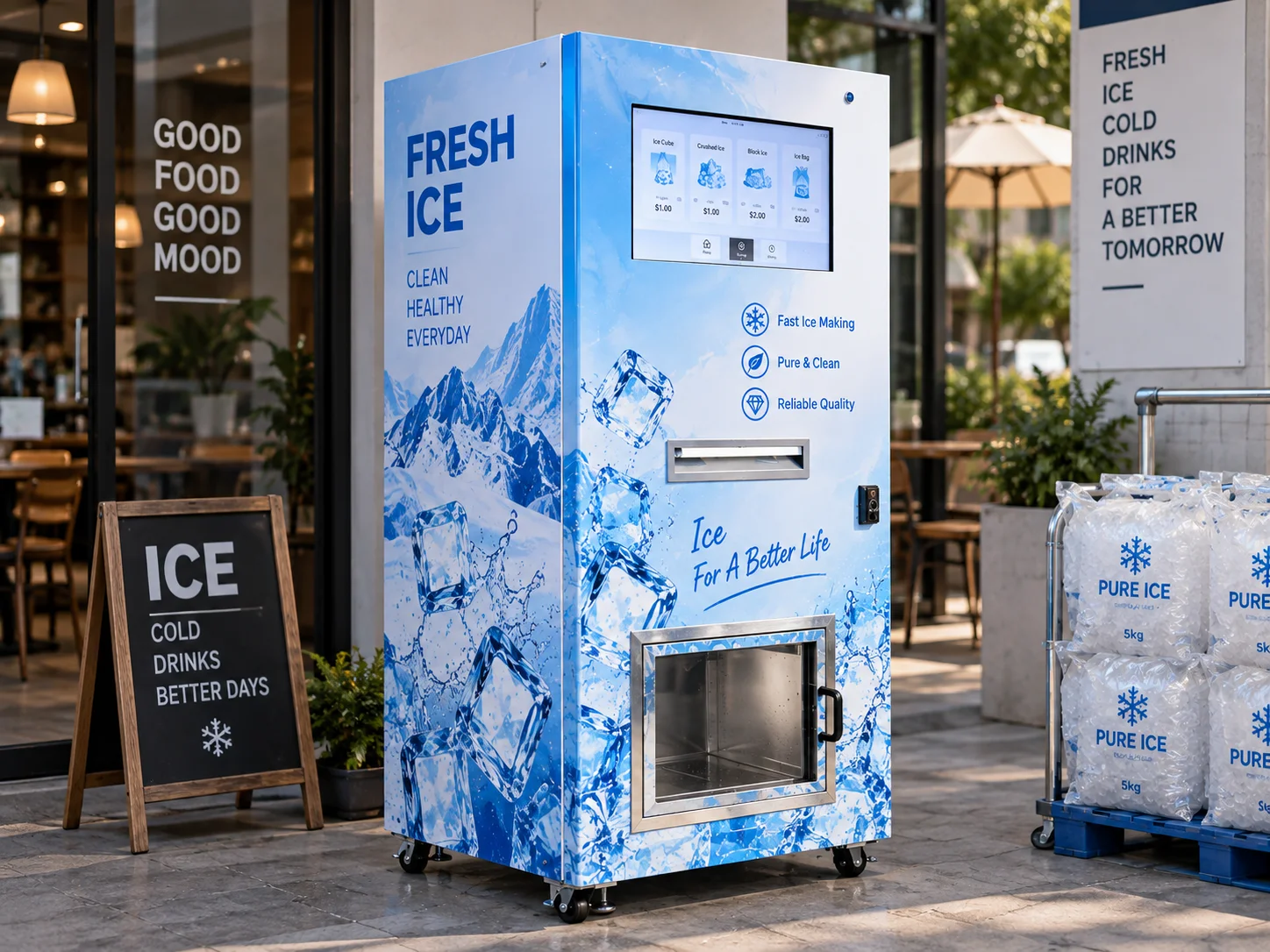
A first ice vending machine may be easy to supervise because its owner passes the location every day. A second machine can sell well and still create a difficult operating schedule if every minor issue requires a separate trip across town. For operators expanding an ice vending machine business, maintenance and response distance deserve attention before the next machine is ordered.
Measure the work that the first location really needs
Keep a service record before planning expansion. Separate scheduled inspections, cleaning and consumable replacement from unplanned visits. Record the reason for each trip, travel time, work completed, parts used and whether the visit restored normal selling. A quick task at the machine may still occupy a large part of the day once travel and site access are included.
Look for repeat causes. Several visits for the same issue may point to an unresolved fault, a consumable that needs a better replenishment plan or instructions that customers do not understand. Fixing that pattern at the first machine gives a stronger foundation for expansion than simply copying the installation.
Evaluate a service route alongside the sales location
Compare candidate sites by how they fit into a realistic inspection and response route. Include traffic conditions, gate opening times, parking for a service vehicle and access to the machine. The distance on a map can understate the time needed to arrive, unload equipment and begin work.
A group of sites near each other may be easier to supervise than scattered locations, but proximity alone does not establish demand. Evaluate both the customer opportunity and the ability to maintain the equipment. Identify who can attend a problem while the usual operator is unavailable.
The Qtech ice vending location guide can help frame the customer-demand assessment. Add a separate service-access review before committing to the site.
Ask what an alert actually tells the operator
Remote monitoring is most useful when it changes the next action. A general offline message does not establish whether the problem is the communications connection, power supply or another condition. Ask which events the selected model reports, what detail accompanies them and whether the information stays available after service is restored.
During evaluation, request examples of normal sales records, supported fault messages and communication interruptions. Confirm whether a displayed quantity is directly measured or estimated from transactions. An estimate can still be useful, but the operator should understand its limits.
Qtech describes remote management in its technical and support FAQ, and the ice vending product listing includes transaction tracking and remote management. Confirm the exact functions, connectivity requirements and any recurring service charges for the proposed configuration.
Give every important alert a response owner
Assign a primary contact, a backup and an escalation route for each location. Distinguish problems that require a visit from those that can be assessed remotely. Only use remote actions documented for the equipment and authorized by the operator; clearing an alarm does not establish that the underlying problem has been fixed.
Keep useful details in the service record: machine identifier, time, symptom, payment or vend reference where relevant, and the action taken. This helps the supplier or technician arrive with context. It also prevents different people from repeating the same checks without resolving the issue.
Standardize supplies while keeping maintenance specific to each machine
Where practical, select common consumables and documented service procedures across the route. Standardization can simplify ordering and staff training, but components should not be treated as interchangeable just because machines look alike. Maintain the supplier's approved parts list for each model and configuration.
Set cleaning, inspection and replacement schedules using the equipment instructions and actual site conditions. Follow the specified procedures for water-contact and ice-contact components. Do not impose one fixed interval across machines with different usage or water conditions. A remote dashboard cannot perform a physical inspection or replace the required maintenance work.
Check the result after the repair
A machine returning online is only one step in restoring service. Follow the documented return-to-service procedure and verify the relevant functions, including a test sale when appropriate. Confirm the customer-facing status and close out any affected transactions through the agreed process.
Review time to acknowledge a fault, time to reach the site, time to restore service and repeated visits for the same problem. These measures help separate an equipment issue from a response or spare-parts issue. Compare sites with their trading hours and demand patterns in mind rather than judging every machine by sales alone.
Make service planning part of the next quotation
Before expanding, request operating instructions, a maintenance overview, a spare-parts proposal and the scope of technical support. Agree who performs installation, staff training and on-site repairs. Ask which diagnostic information can be shared with a local technician and how a support request is escalated.
Discuss a multi-site ice vending plan with Qtech using your proposed locations, service coverage and expected machine quantities. Include what you learned from the first location. A repeatable service process makes it easier to judge which additional sites the team is ready to operate.
Frequently Asked Questions
No. It can help identify supported faults and guide response, but physical inspection, cleaning and other documented maintenance still need to be carried out.
Not automatically. Use the instructions for each configuration and adjust the operating plan to site conditions, usage and service history.