French Fries Vending Machine Buying Guide for Hot Snack Operators
Choose a fries vending machine around the food customers receive, the queue it can handle and the daily service it requires. Use a pilot to verify the complete workflow.
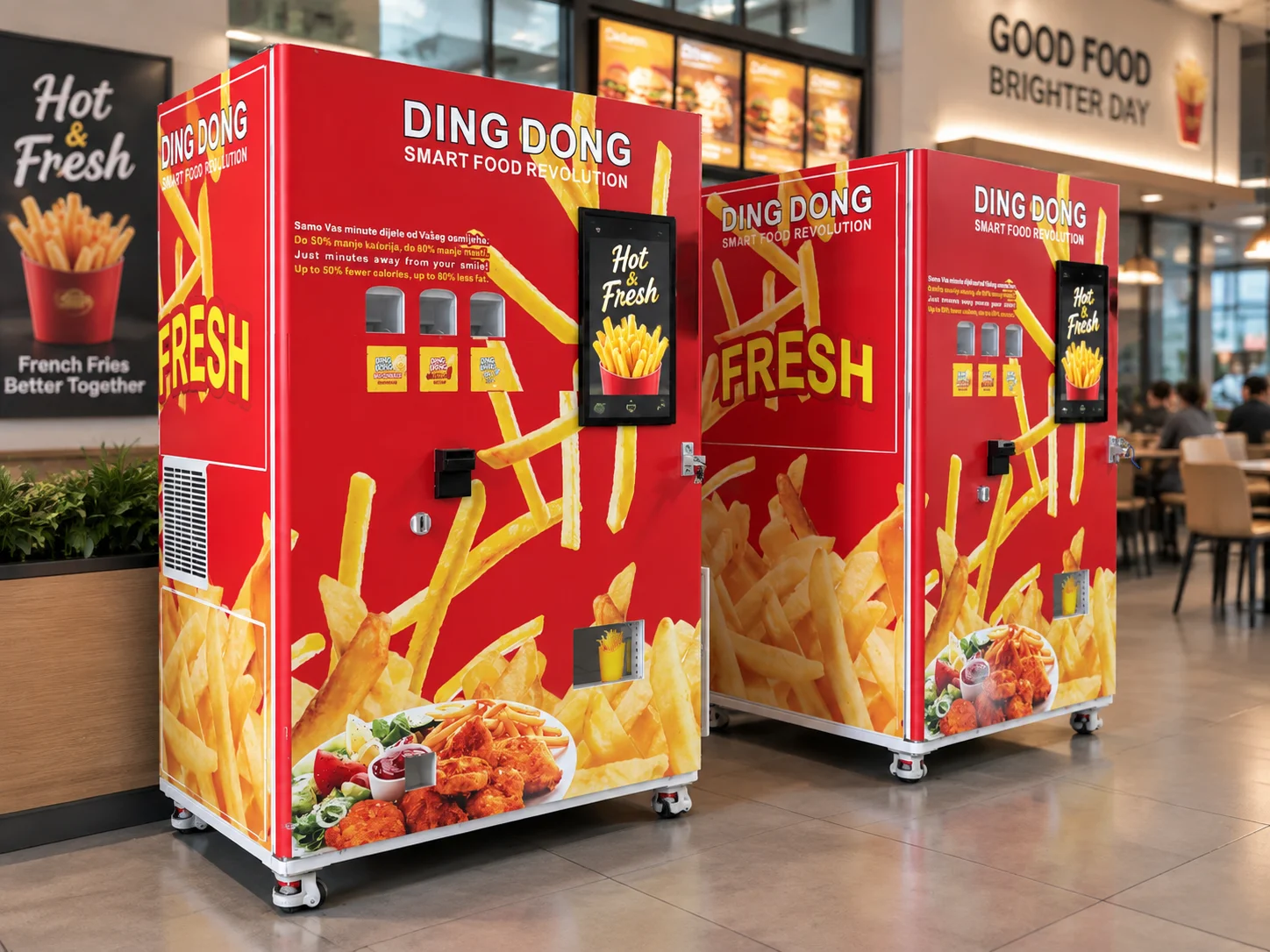
A French fries vending machine should be evaluated as a complete food service process. The important result is a portion that customers enjoy, receive at the promised time and can buy again reliably. Cabinet appearance and automation matter, but they do not replace a test with the exact fries and packaging you intend to sell.
For campuses, entertainment venues and other sites with demand for warm snacks, a focused pilot can answer the buying questions that a brochure cannot. Test the menu, a burst of consecutive orders, the collection process and the work needed between selling periods. Those results provide a stronger basis for choosing equipment and negotiating a location.
Confirm whether the machine fries or reheats the product
The phrase fries vending machine can describe different food processes. Ask the supplier to show how the actual model stores, transfers, heats and delivers each portion. Find out whether it handles cooking oil on site or heats a product prepared earlier by a food supplier.
Qtech's French fries and fried chicken vending machine lists automated heating and dispensing for suitable packaged hot food, remote monitoring and configurable menu, payment and heating settings. Ask which food preparation and packaging are approved for the configuration in your quotation.
Our explanation of fries vending without on-site deep frying describes a prepared-food heating approach. Here, no on-site deep frying refers to the machine's process. It does not establish that the supplied fries contain no oil or qualify for a nutritional claim.
Test the menu before committing to a cabinet
Send representative food samples and the intended serving pack for evaluation. Record the product brand, cut size, portion weight, starting storage condition and heating program. These variables need to stay consistent if a successful demonstration is to be repeatable after delivery.
Evaluate the fries immediately after pickup and again after a realistic walk to a seat. Look at texture, temperature consistency, broken pieces and moisture inside the pack. A package that protects the portion during transfer may also retain steam. The food, packaging and heating method need to be tested together.
Begin with a narrow menu that staff can replenish accurately. If you intend to add nuggets, wings or wedges, validate each product separately before offering it. Do not assume a heating program that works for one item is appropriate for another. Include sauce packs, utensils and napkins in the collection test if they are part of the offer.
Check throughput during the busiest selling window
Ask for the complete time from order acceptance to a collection-ready portion. Determine whether the system heats more than one order at once, whether it accepts an order while another is running and how customers identify their own purchase. These details determine queue length more directly than touchscreen size.
As an illustration, a sequential process taking three minutes per order has an ideal ceiling of 20 orders per hour before allowing for collection delays or interruptions. This is not a Qtech performance specification. Measure the actual machine with consecutive orders and compare the result with your site's busiest period.
A campus break or cinema interval can concentrate demand into minutes. Choose a location where customers have enough time to wait and where the queue will not block a passage. If the site needs a broader meal service, our hot food vending guide for night shifts discusses demand outside staffed cafeteria hours.
Plan storage and cleaning as daily operating tasks
Confirm the storage conditions required by your food supplier and the machine's ability to maintain them at the site. Ask how products are dated, rotated and removed, and what the unit does if temperature control fails. Have the storage and heating process validated for the selected foods and the market where they will be sold.
Request a walkthrough of the cleaning procedure, including food transfer areas, the heating area and the pickup compartment. Identify removable parts, approved cleaning materials and the access needed for service. Assign someone to inspect the machine, replenish stock and respond to problems even when no cashier is present.
Check electrical load, ventilation and placement requirements with the venue using the actual model specification. Equipment that does not deep-fry on site still produces heat and needs suitable installation. Keep the service area accessible without making staff carry supplies through a customer queue.
Compare cost per portion and service effort
The purchase price is only one part of French fries vending machine cost. Compare food and packaging, payment charges, location rent or revenue share, electricity, software, cleaning, restocking labor and maintenance. Include expected refunds and discarded stock in the operating model.
Use the pilot to track completed orders, failed vends, repeat demand and service minutes. A lower-priced food portion may be a poor choice if it produces inconsistent results or more complaints. Likewise, strong gross sales can hide an expensive replenishment route. Our hot food vending operating cost guide explains the main cost categories to compare.
Turn a product inquiry into a practical trial
Prepare a brief with your country, venue type, expected peak orders, desired menu, sample packaging, available power and preferred payment methods. Ask for a demonstration of consecutive orders, an unavailable item, a failed transaction and the customer refund process. Obtain a written list of included equipment and optional features.
To discuss the food and equipment together, request a French fries vending machine quotation from Qtech. Share the intended product and portion size so the proposal can address the serving experience as well as the cabinet.