How to Size an Ice Vending Machine for Reliable Daily Sales
Compare ice production, usable storage and peak demand before choosing a vending machine. This guide explains the operating details that make a quote useful.
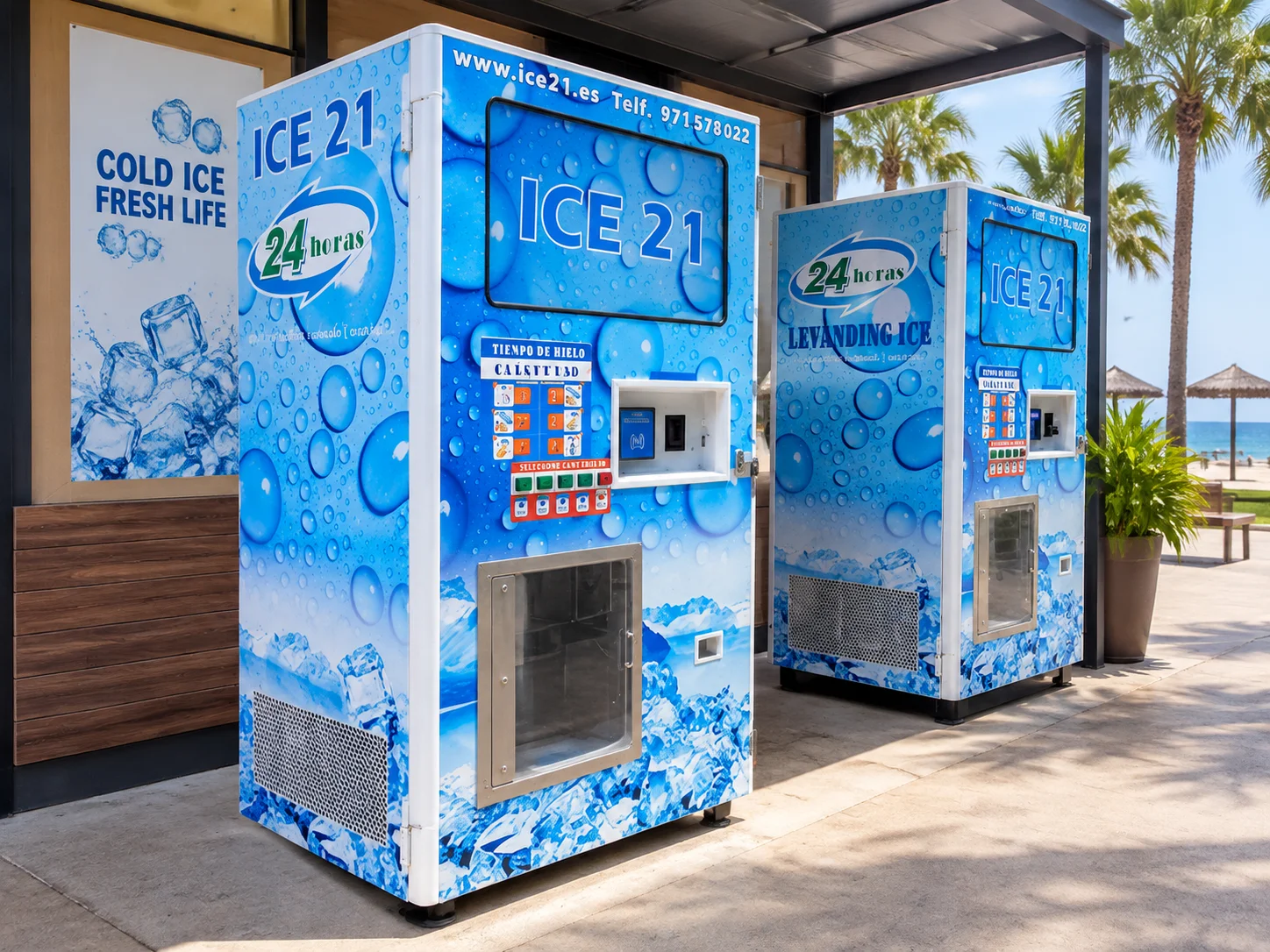
An ice vending machine needs enough production to replenish daily sales and enough usable storage to serve customers when demand arrives together. Those are different requirements. A machine can have an impressive daily output yet run short during the morning rush if its storage buffer is too small.
For fuel stations, campgrounds, marinas and neighborhood retail sites, the buying decision starts with a demand profile. Record when customers need ice, how much they buy and how the site will be serviced. Then compare machines against that operating pattern. The aim is to keep ice available at the times that make customers return.
Start with the amount sold per transaction
Decide whether customers will buy sealed bags, loose ice for their own container, or ice alongside purified water. Each format changes the collection area, dispensing equipment and consumables. A customer filling a cooler at a marina may need a different purchase size from a shopper buying ice for drinks at home.
A commercial ice and water vending machine is worth comparing where both products have local demand. Qtech's listed model combines water vending, ice making and ice sales, with configurable filtration, payment and dispensing options. Confirm the supplied configuration in the quotation, including whether bags are automatically filled or handled another way.
Separate production capacity from available stock
Daily production describes how much ice the machine can make under stated conditions. Usable storage describes how much it can hold ready for purchase. Neither figure alone tells you how many customers it can serve during a short busy period. Ask for both, along with the rate at which the machine replenishes ice while vending.
Consider an illustrative site selling 30 portions of 5kg between 7 a.m. and 9 a.m. That is 150kg in two hours. A nominal 450kg per day averages 18.75kg per hour, or 37.5kg over the same window. Even if production were steady at that rate, the site would need at least 112.5kg of starting stock before allowing for losses or a reserve. This is a planning example, not a performance forecast.
Qtech lists a 450kg ice maker vending machine with output of up to 450kg per 24 hours depending on operating conditions. Ask for the ambient and inlet-water temperatures behind the rating, usable bin capacity and expected recovery rate at your proposed site. Do not treat the maximum rating as guaranteed summer output.
Check the site before comparing machine prices
A useful site survey records the water connection, pressure, drainage route, electrical supply, service clearance and customer access. Include photographs and local summer temperatures. A cabinet placed in direct sun or an enclosed corner needs a different assessment from one in a shaded, ventilated location.
Customer convenience matters too. Someone carrying a heavy bag should be able to reach their vehicle without crossing a difficult route. Look for lighting, readable instructions and a pickup area that stays clean. For a separate discussion of customer demand by location, read our ice vending machine location guide.
Include water treatment and servicing in the specification
Share the local water information with the supplier before selecting treatment equipment. Ask which filters are included, how their replacement intervals are determined and whether water treatment affects available production. Obtain the cleaning procedure for water-contact and ice-contact parts, together with access instructions for technicians.
An unattended sale still relies on an operator. Allocate time for inspecting the dispensing area, cleaning, replacing consumables and handling faults. Request a demonstration of remote alerts and identify who receives them. A warning is useful only when someone can respond before customers encounter an unavailable machine.
Compare the complete operating cost
When evaluating ice vending machine cost, separate the equipment quotation from site installation and recurring expenses. Installation can include delivery, lifting, plumbing and electrical work. Recurring expenses include water, electricity, filters, bags where used, payment charges, software fees, site rent and service visits.
Build low, typical and busy demand scenarios using your own local prices. Track sold kilograms, unavailable hours, customer refunds and service time during a pilot. Revenue alone can hide a machine that sells well but needs frequent expensive visits. Include equipment finance or depreciation when assessing the longer-term business result.
Prepare a configuration request that gets a useful answer
Send the destination country, site photographs, utility details, desired ice format, portion sizes and expected busiest-hour demand. Ask the supplier to identify standard equipment, optional items and the production conditions used in its proposal. Request a dispensing demonstration and a maintenance overview before final selection.
To compare a configuration for your location, request an ice vending machine quotation from Qtech. Include both estimated daily sales and the busiest selling window so production and storage can be assessed together.